.svg)




I was thirty-three when the founder of my then-company entrusted me with the CEO job, the role he had occupied for nearly two decades. It was a huge moment in my professional career. One for which I was immensely grateful, but at the time, I also remember feeling late rather than young. A feeling that by itself was telling of the fact that I was still clearly unfinished and naive in ways I only recognize now.
Back then, I had a very youthful idea of leadership. I thought it needed to be loud and visible. Big calls and clear, decisive moments that everyone would recognize as important. I pictured a Wolf of Wall Street-style mezzanine floor from which I would be making sweeping companywide proclamations with total certainty. I believed that energy, bravado, and conviction would be enough, that momentum would substitute for judgment, and that intensity could replace patience. Truth is that on most days, I was also privately relieved that my uncertainty beneath it all did not show much on the surface.
What I clearly did not understand yet was how much of the work would be quiet, interior, and largely unseen. How often it would happen in private conversations, lonely judgments, and moments where nobody is watching and nothing looks textbook ceo-ish. The deeper work is less cinematic and far more human. It is about what a CEO chooses to see, what they refuse to see, and how they hold reality steady for everyone else.
Becoming a real leader of a company, I have learned, is less a step upward and more like slowly growing into a responsibility that keeps expanding around you. You assemble yourself over time through mistakes, discomfort, and the gradual shedding of illusions about what power and leadership really mean.
The job begins with a deceptively simple responsibility. To notice what is actually happening. This sounds trivial until you try to do it. A company is a story that hundreds of people tell themselves at the same time. It can be honest or comforting, sharp or self-serving. The CEO is the main editor of that story, whether they want to be or not. Organizations are also brilliant at manufacturing their own versions of reality. Over time, their versions can drift so far from reality that everyone inside starts to believe their own mythology.
The CEO stands at that boundary. One foot inside the company and the other in the real world where the company operates. Their most important contribution is often not strategy, but truth. Doing what it takes after recognising the truth is where leadership becomes less intellectual and more personal.
One of the frequent unsexy demands of leadership is restraint. Saying no, and living with the consequences of it, has been one of the hardest parts of the job for me. The organization always wants more: more projects, more hires, more exceptions, more complexity. My own instinct is to help, to please, to keep everyone happy. But I’ve learned that leadership sometimes means disappointing people today so the company can be stronger tomorrow. Clarity can feel cold to those who crave motion. Yet I’ve come to believe that clarity is often the kindest gift I can give. Because choosing is uncomfortable. Every decision creates disappointment somewhere. Every direction excludes another path. For people pleasers like me, it’s especially hard.
A lot of these decisions come down to time and attention. I can learn more about myself and my company from my own calendar than from any strategy document I’ve ever written. My attention shapes the company slowly and invisibly. Whether I like it or not, what I look at becomes important. What I ignore quietly recedes. I’ve learned, sometimes the hard way, that I have to treat my attention as scarce because, in reality, it is. Equally, the job is to remove complexity from the organization and reduce the cognitive tax on others working alongside you. The best leaders constantly redesign the system so less energy is required.
Similar sensibilities have shaped how I think about people. The greatest privilege of being a CEO is choosing the people you get to work with every day. Talent decisions compound like capital decisions. And your most important decisions are the people you place in positions of influence. No founder or CEO builds the company just by themselves. We choose the team that builds it. I know that every hire I make sends a signal about what I value. Every promotion reveals what behavior wins here.
So I find myself constantly asking: what am I actually rewarding? And when am I choosing to reward it?
For example, there are often moments when I can sense someone’s potential before they themselves can. My instinct used to be to accelerate them quickly. I’ve learned that this usually backfires. People grow best when they break their own shell. When I try to crack it for them, it tends to create fragility rather than confidence. Leadership, I’ve found, is less about pushing people up and more about giving them space to outgrow their old selves, then meeting them with support that matches the moment they are entering. Personally, I think a company’s future is effectively the sum of the people it develops into leadership over long periods of time. So the timing with decisions like these are massively important to me.
What one has to make peace with is that all of this can often seem like invisible work.
I now recognise it as emotional labour. Managing anxiety without spreading it. Absorbing pressure without passing it down. Holding conviction while staying open to being wrong. Projecting calm while living with uncertainty. It is why I am slowly getting comfortable designing for a far emptier calendar.
All this invisible inner work becomes even harder in a world that prizes visible leadership, which creates another tension at the heart of the modern CEO job. Many companies now appear to run as much on founder brand as on products, systems, or teams. The market rewards visibility, personality, and constant public performance. Leaders are expected to be on podcasts, on social platforms, on stages, and permanently “on.” For introverts, this can feel like an uncomfortable masquerade rather than leadership. I have felt this acutely myself as someone who does not crave the spotlight. Your ultimate goal then becomes to build a company that does not require you to perform every day.
My instinct is to be behind the scenes, thinking, building, editing, and fixing rather than narrating my own story to the world. Yet the reality is that a CEO’s presence, voice, and visibility inevitably shape how the company is perceived, internally and externally. The real challenge is not to become a different person, but to find a way of showing up that is honest, bounded, and sustainable, so that leadership does not become a performance that slowly drains the person doing it.
Ultimately, the highest form of leadership is paradoxical. A great CEO makes themselves progressively less necessary.
They build systems that do not depend on heroics. They develop leaders who can lead without them. They create clarity that outlasts their mood or presence. They remain useful, but not indispensable.
At its core, the job is simple to describe and difficult to live. Seek the truth. Tell the truth. About reality. About people. About yourself. Then decide, with imperfect information, what the company will do and what it will refuse to do.
That is the weight a CEO carries.
EDITOR’S NOTE
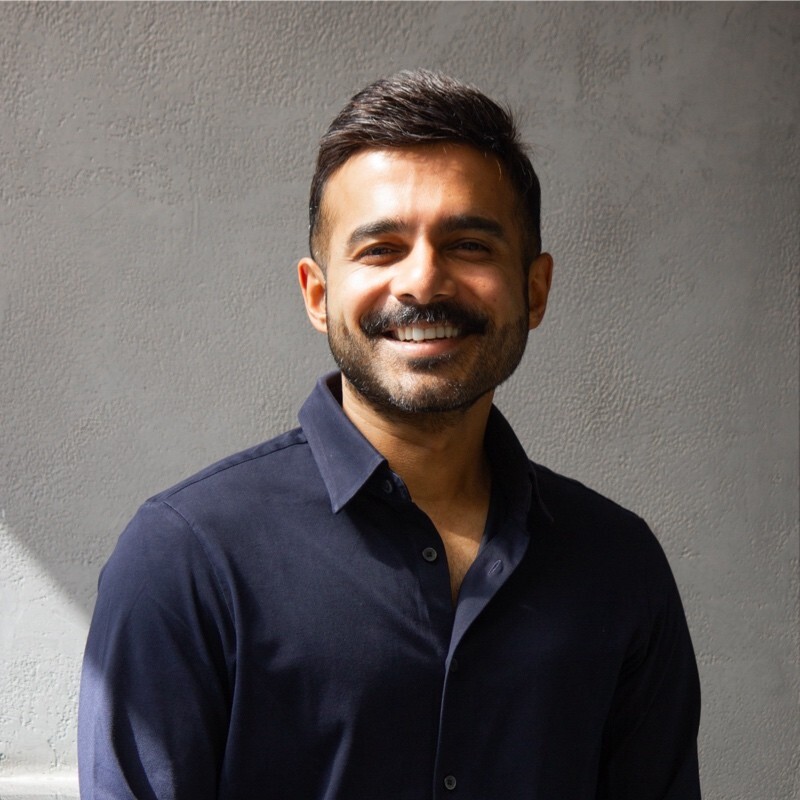
Who is the CEO? Today, founders are one of the most glorified species on the internet. They're the sentinels of the startup world, larger than life, and propped up by mythmaking and lore alike. But who is the man in the arena, and how is he different from the man in the mirror? I asked this question of Gautam, CEO of Talented, one of the finest ad agencies in the country. This extremely honest, introspective, poignant piece was his reply.


.png)
.webp)

%20(1).jpg)
.png)


.svg)


