.svg)


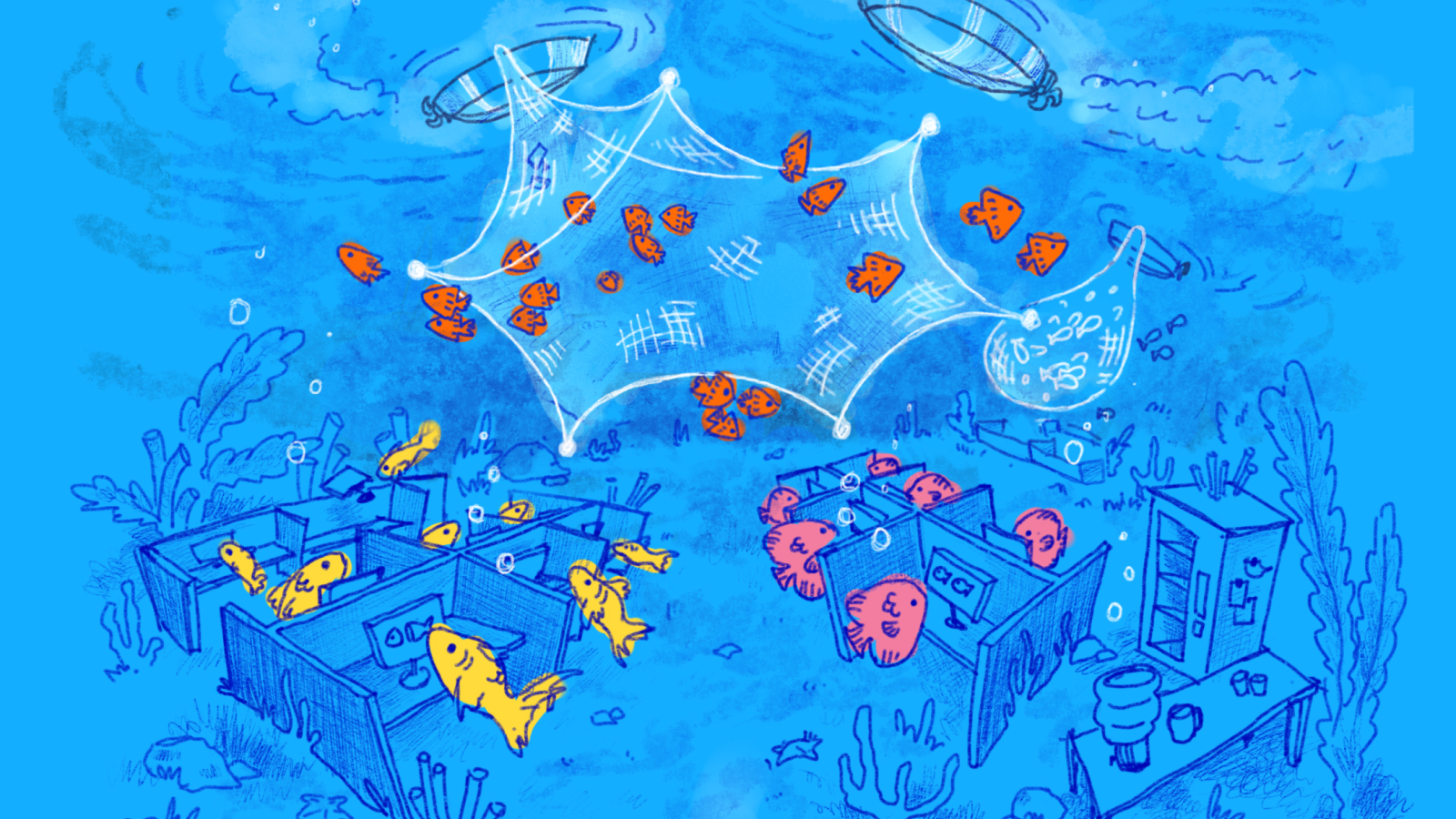



Harishree* starts her day at 1 PM. Like many other startup employees in the Silicon Valley of India, she has a pineal gland configured to move with Eastern Standard Time. After a quick shower and an even quicker phone call to her mom, she is ready and out of the PG room an hour before her 12-hour shift as an Email Marketing Manager at a Sequoia-funded marketing company. She shifted to Bangalore just three months ago, after graduating with a degree in Applied Mathematics from a Tier I NIT. She lives a mere 10-minute walking distance from her office in HSR Layout. Even though half her paycheck goes to rent, she is thankful for having escaped the notorious Bangalore traffic.
July 10, 2025 was supposed to be a normal day for her. She needed to get to her usual designated area away from the air conditioner vents that was kept at a constant 16 degrees Celsius before anyone else picked it up. Clean up the cold email list for the day. Report to her manager. Send the automated emails right when executives logged in to work in New York or Los Angeles or San Francisco. Monitor the responses from the previous day. Check in with the copywriting team to see if they could sharpen the subject lines on the next batch. Pretty routine work.
Unfortunately for Harishree, her colleagues had spent the last few months cracking Meta Ads as a profitable acquisition channel for the company. Cold emailing was no longer the growth engine. The business no longer required a three-member email team to keep the company afloat. So the junior-most hire in the team – Harishree – had to go.
This is the reality behind a corporate layoff. More often than not, layoffs have nothing to do with individual performance and are executed purely based on metrics. When an organisation decides to restructure, it triggers a chain of events that begins months earlier in executive meetings, moves through standard HR procedures, and leaves a long-term impact on employment, workplace trust, and personal lives.
For a founder or executive, a layoff is often treated as a math problem solved to satisfy board members or extend a financial runway. The ground reality is far less black and white. This story is a study on the anatomy of a layoff. In five structured parts, we look at what happens before, during, after, and way after the cut.
Chapter 1: The Incubation
A few years ago, Amit Rajdev’s Ahmedabad-based e-commerce agency faced a sudden cash crunch. A sudden reduction in the roster and delayed client payments meant that he didn’t have the runway to keep his business afloat for even a few months. “I had to make the difficult decision to lay off part of my team. We had strong performers, but the business couldn’t sustain payroll without jeopardising survival. It wasn’t about performance; it was about keeping the company afloat.” Rajdev shares with Humanise.
As a small agency he built from the ground up, Rajdev had a personal relationship with every employee, especially the early hires. “Ultimately, I realised that protecting the business meant protecting the jobs of the majority, even if it meant letting go of someone I had a personal history with,” he shares.
Amit Rajdev was not and will not be the only founder to have gone through this dilemma. The friction that he talks about, the one between personal loyalty and the company culture it fosters with the economics of survival for many founders and leaders, triggers an agonising three-to-six-month delay where founders balance personal context against cold numbers.
Sharon Kuriakose, a former Senior Director at a global payments technology company, confesses that this incubation period is often the most isolating phase of leadership. “One of the hardest parts of a layoff decision is when the impacted employee is someone you've worked with for many years or have built a personal relationship with outside of work,” Kuriakose says. “You know their family situation, personal challenges, and the impact the decision may have on their lives. Yet, you must maintain confidentiality throughout the process.”
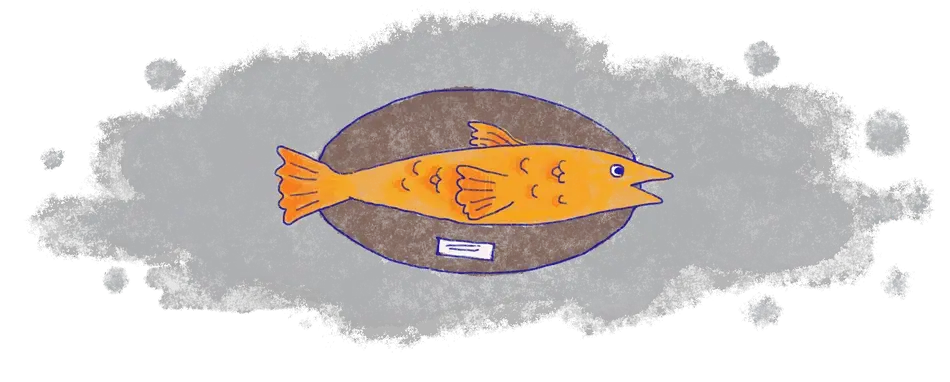
In larger corporate and tech ecosystems, this incubation isn't just sparked by a dry bank account; it is increasingly driven by strategic reallocation of capital. More recently, AI is the cited reason.
"With the current situation with AI, there are a lot of layoffs. This is not necessarily because AI is taking jobs, but also because companies are adjusting finances because AI is expensive. There might be fewer jobs because AI enables folks to do cross-department work without the headcount. One person can maybe handle an entire department in a startup now," says Ahmed, the ex-Head of Product at a tech startup that closed down in 2024 due to an inability to raise another round of capital.
“But there are a lot more companies starting up now. Anyone can start up now. So, there is a market shift happening. It's like a rolling rock. Nobody knows its final form yet, but it's moving very fast,” he adds, underlining the uncertainty we all have been feeling lately.
Essentially, layoffs are just one point in a macroeconomic flywheel. Whether it is an agency experiencing a cash crunch or a fintech embracing AI, the boardroom math operates the same way. When interest rates are low and credit is cheap, the target is growth at all costs, leading to aggressive hiring sprees. Later, when interest rates spike and capital dries up, the board notices that staffing is the single largest expense on the balance sheet. Roles that were essential six months prior can become a luxury or be deemed redundant overnight.
But what often goes unnoticed is the cognitive dissonance leaders face in the run-up to a layoff. For months, executives must run regular all-hands meetings, set KPI, appreciate performance milestones, and project an image of steady growth, all while privately running lines through names on a spreadsheet. “It's never easy. Regardless of the circumstances, leadership often becomes the focal point of frustration, grief, and uncertainty after a layoff,” sighs Kuriakose.
Chapter 2: The Execution
Once a layoff escapes the strategic incubator, it takes its most ruthless form. It must now grow to its full potential in an environment where often times empathy is systematically engineered out to minimise legal liability and operational friction.
Consider the experience of Maya*, who was laid off from her position as Senior Director of Marketing at a fintech firm after she had just led a massive branch launch that successfully pushed her company into coveted billion-dollar unicorn status. To add insult to injury, the news was not delivered to Maya in a boardroom or a private 1:1 with her manager, but via a generic, mass email. The message stated simply that there had been a reduction in force of 152 people and that she was one of them.
Maya’s is not an isolated incident. Statistics say that in the case of over 72% of layoffs in India, the notice period given to the affected employees was just under 48 hours.
The remote workplace has further accelerated this extraction to a matter of minutes. Bharat*, another laid-off Software Engineer, shares his horror story. The day he got laid off, Bharat had attended his regular team stand-up call and got work assigned with no indication that his role was at risk. Within an hour of that call, an email notification hit his screen. And ten minutes after the notification, his access to Slack, his corporate email, and other internal repositories was revoked. It was only after two business days that he received any personalised, official communication.
However, not every layoff plays out like a Black Mirror episode. The experience heavily depends on the company's culture and values. From this writer’s anecdotal evidence of speaking to over 2 dozen employees for this story and experiences collected from the web, startups seem to be more humane and empathetic when it comes to making these decisions. Perhaps the small size of the teams and the personal relationship between the people making the decision and the people affected makes it all a more humane process.
For instance, let’s revisit Ahamed, the ex-Head of Product mentioned before. He joined the startup right out of college and rose through the ranks in the six years he spent building the company from the ground up. He had seen the signs early – through slower release cycles, dropping team velocity, and overly generous company-wide holidays.
When the end came, the founders provided a three-month salary severance cushion and actively set up placement support to ensure every single laid-off employee found a landing spot at another company.
Yet, even when a company handles an exit with respect and solid financial backing, the emotional deflation stays the same. "Working at a startup is like an investment," he reflects. "You think one day you will have a home run — either an acquisition or an IPO — and you’ll finally get the fruits of your stocks. That didn’t happen. Six years is a long time in a startup, so it was still disappointing," he says.
To maintain this emotional distance during mass cuts, larger organisations rely on a structural buffer class: the Human Resources department and mid-level managers. These individuals are inserted into the line of fire to absorb the immediate human fallout of the leaders’ decisions.
They are handed a rigid script, instructed by corporate counsel to strip away personal empathy to avoid legal risk, and left alone to manage the subsequent grief and anger. While employees often view HR as the cold face of the corporation, the messengers themselves carry an immense physical and emotional burden.
A now 40-year HR professional based in Mumbai recalls an earlier experience in her mid-twenties, working in telecommunications, where she had to deliver termination notices day after day. The stress of delivering distressful news to employees who had been let go finally caught up to her in the form of various autoimmune diseases. "I wasn't the reason for the layoff, and I didn't make the decision. I was just the messenger. Yet I couldn’t sleep at night on most days."
A corporate layoff functions as a downward cascade of pressure, where each layer of the hierarchy shifts the burden to the one below it. It begins with the founders and executives, who carry the strategic anxiety of runway formulas and board pressure. To alleviate that pressure, they hand down a mathematical mandate to the HR department. HR is then forced to absorb the immediate emotional shock of the decision, translating executive panic into rigid, legally sanitised termination scripts. But ultimately, the buck stops at the bottom. The entire weight of this structural pipeline is dumped onto the individual employees, who are left to bear the ultimate, unvarnished consequences: the sudden loss of livelihood, identity, and security.
Chapter 3: The Severance
Ultimately, whether the news arrives via a cold automated email or a strained conversation with an exhausted HR manager, the result is almost identical. For the person staring at the blank screen or walking out of the office with their belongings, a chapter of their life is suddenly over. What begins next is the slow, month-by-month reality of navigating a competitive job market.
Finding a new role in almost any sector is not an easy feat at the moment. shows it takes an average person anywhere between three and six months to find a job after a layoff, and in the current climate, it is increasingly common for the search to stretch past a year.
This is what happens in those six or more months:
P.S: This timeline is synthesised from anecdotal evidence from over a dozen conversations carried out with employees laid off in the past three years.
Day 1 to Month 2: The Momentum Phase
In the immediate wake of a layoff, energy and hope remain surprisingly high. If a severance package exists, it acts as a psychological and financial safety net. The individual treats the gap as a temporary detour, an unexpected sabbatical, or a period of hard-earned freedom. They dive into optimising their LinkedIn profiles, updating portfolios, and aggressively reaching out to their professional networks. The prevailing belief is that this is a temporary market hiccup, and the next offer is just an interview loop away.
Months 3 to 4: Cognitive Friction
The initial wave of applications is met with automated rejections or absolute silence. Getting ghosted by recruiters becomes the norm. At this stage, an uncomfortable inner voice creeps in, reminding individuals that they are stuck in life while everyone is moving past. The shame of having been unemployed for over a quarter of a year sets in. To avoid pity, unsolicited advice, or perceived judgment, they stop socialising with friends and family.
Months 5 to 6: Identity Confusion
By half a year, financial reserves are noticeably dwindling, and self-worth hits a dangerous low point. Many force themselves to maintain a strong, optimistic facade publicly on LinkedIn, commenting on industry trends and celebrating others' wins, while privately feeling fundamentally unskilled and obsolete. The gap on the resume starts to feel like a scarlet letter.
Month 7+: The Burnout Threshold
Total hopelessness takes over. To escape the brutal cycle of corporate rejection and reclaim a sense of control, many abandon their primary industry identity entirely. They stop applying to tech companies and startups, frantically pivoting instead to generic, highly structured alternatives — studying for government banking exams, public service entry tests, or applying for postgraduate degrees — just to find a predictable path forward.
While the laid-off employee is fighting this quiet war at home, the colleagues who "survived" the cut are dealing with a completely different kind of psychological tax.
Chapter 4: The Guilt
When a mass layoff occurs, we are generally concerned about those who walk out the door. But rarely ever does the survivors’ guilt get noticed. Employees look at the space left by a talented, high-performing colleague and realise that individual output was never the shield they believed it to be.
This environment introduces what can be called the complicity trap. Management must keep the business running with a depleted workforce, which often requires inserting surviving employees directly into the remains of their friends' careers.
Suhasini*, a senior employee in a Biotech company, shares with Humanise a difficult conversation she had to navigate in the high-stakes days leading up to an internal restructuring, when she was pulled into a private meeting by her manager. She was offered the project scopes, responsibilities, and the exact title of a close colleague — someone she shared lunch with every day — before that colleague had even been notified or escorted out of the building. “I also inherited his direct report, and they were very close. I built a good relationship with her later, but it was a bit awkward at first,” she added.
The moral friction of this moment is intense. An employee cannot realistically refuse the expanded scope without risking their own standing during a volatile time. Yet, accepting it feels like an act of corporate complicity. This dynamic permanently freezes the natural warmth of office relationships. You can no longer fully trust the peer sitting next to you when you know they might be handed your life's work tomorrow.

Ammarah, the survivor of a mass layoff at a food delivery platform, says, “I was fortunate to have a good manager. But my relationship with senior leadership shifted significantly. I stopped trusting what they said because I didn't feel like the leadership values that they were talking about were actually being embodied. I stopped relying on social contracts and ‘we're family’ rhetoric because we as people didn't apply social laws here.”
Eventually, the initial mourning period wraps up, and the office enters a state of hyper-survival. Ammarah recalls watching remaining team members quickly move in to pick through the best work, claim high-visibility projects, and absorb the most strategic scopes left behind by their departed friends.
It is a Darwinian survival mechanism: in a shrinking corporate ecosystem, you must rapidly anchor yourself to revenue-generating projects to prove your own absolute necessity before the next quarter’s spreadsheet is drawn up. Solidarity is traded for self-preservation. And the psychological rot of this environment ruins the foundational trust required to sustain a traditional career path, proving to both the displaced and the remaining workforce that the traditional corporate contract is broken.
Chapter 5: The Collateral
The trauma of a layoff isn’t limited to the workplace. It ripples outward, disrupting financial dependents and domestic relationships.
For professionals supporting multi-generational households, a paycheck funds non-negotiable overheads: home loans, elderly care, living costs, and school tuition. In a culture where stability dictates social currency, losing a job can dismantle a person's personal future.
For Bharat, the software engineer mentioned earlier, the layoff derailed his entire personal life and plans. After his job hunt stretched past a year, his fiancée’s parents called off their arranged marriage. “An arranged marriage is built entirely on the projection of future stability," Bharat shares. "They were interested in me because of my high income and my ability to provide for their daughter. She didn’t get much say in it.”
Sociological research consistently shows that involuntary job loss doubles a couple's annual separation risk, signalling a structural shock to extended families. For instance, this landmark Harvard University study by sociologist Alexandra Killewald found that husbands lacking full-time employment face a 33% higher risk of divorce compared to those with full-time roles.
When a single corporate spreadsheet can dismantle a family's stability and freeze an individual's personal future, it forces a profound shift in how the entire workforce views employment. It is precisely these deep personal fractures that are driving a massive, collective reassessment of the traditional corporate contract and a generation of professionals who are entirely done with the illusion of corporate loyalty.
Chapter 6: The Prognosis
The structural shifts in the tech and corporate worlds have created a system that feels increasingly rigged against those who exit it. On paper, corporate communications label layoffs as "strategic realignments" or "reductions in force" that carry no personal stigma. In practice, the hiring market operates on a Catch-22: it is always exponentially easier to find a job when you already have one.
Automated resume-screening software and interview panels implicitly view a career gap with suspicion, treating a layoff as a quiet indicator of poor performance, regardless of the macroeconomics involved. The burden of proof falls entirely on the worker to explain why they were cut.
When these corporate adjustments hit mid-to-late-career professionals, the structural fallout shifts from a career detour to a deep disruption of personal life.
The abrupt loss of income frequently triggers intense personal shame. It is a documented reality that many late-career professionals struggle to tell their partners or families about a layoff. Some continue to wake up at their usual time, dress in business casual, and leave the house to sit in cafes or libraries for eight hours, pretending to commute to a job that no longer exists until their financial reserves completely evaporate. The resulting financial stress and erosion of domestic transparency can cause severe strain on marriages, sometimes contributing to a rise in late-stage marital separations and divorces.
Faced with these broken institutional systems, the modern workforce has begun building its own informal infrastructure. Because layoffs have become regular occurrences, communities no longer rely on corporate outplacement services or standard job boards.

Instead, the market has seen a rise in grassroots, community-driven talent databases, shared public spreadsheets, mutual-aid circles, and tight informal referral networks. These systems operate explicitly to destigmatise job loss. By circumventing broken corporate hiring pipelines, workers use peer-to-peer solidarity as a practical survival tool.
The ultimate cultural takeaway from these repeated cycles is a total reassessment of the traditional corporate contract. The people profiled across this story — from Harishre to Maya, Bharat, Ahmed, Ammarah, and Suhasini — all arrived at the same conclusion: the corporate promise of stability in exchange for loyalty is dead.
The new operational mantra for the modern worker is clear: Love your craft, never love your company. This realisation has also driven a major pivot away from traditional employment. Rather than jumping back into the volatile 9-5 cycle, an increasing number of laid-off professionals are opting to establish independent consulting practices, collectives, or boutique agencies. They are choosing to trade the illusion of corporate security for the tangible control of professional autonomy.
Appendix: What to do in the first 48 hours after a layoff
Despite the reasons provided in the email, layoffs are difficult. It is extremely easy to spiral from confusion to self-doubt. There might be tons of questions in your head: Why me? What did I do wrong? How do you find another job? Where do you even start?
But the first 48 hours after a layoff have nothing to do with finding your next role. Get your documents in order: Ensure your official separation letter explicitly states terms like "layoff" or "position eliminated. Never sign documents that frame the departure as a voluntary resignation, as this can affect future background verification checks or your final settlement payouts.
- Regulate your nervous system: A sudden termination triggers your nervous system’s physical fight-or-flight response. Do not send reactive emails, sign complicated agreements on the spot, or post emotional updates online while in this state. Request 24 to 48 hours to review all severance documents calmly before signing.
- Enforce a mandatory 48-hour social media freeze: Do not post about your exit on LinkedIn or Twitter immediately. Take two days to let the initial shock clear so that when you do announce your availability to the market, your message is clear, strategic, and focused entirely on your next steps.
- Collect all details you may need: Before your enterprise accounts are deactivated, secure the personal phone numbers, personal email addresses, and LinkedIn profiles of your immediate managers, close peers, and cross-functional partners. Archive your personal performance metrics, major project completion data, and commendation emails to use as concrete evidence for your resume.
- Plan your next six months: Calculate your immediate financial runway. Review your final settlement details — including your provident fund (PF), gratuity, accrued leave encashment, and severance payout. Build a strict survival budget based entirely on your fixed monthly costs to determine exactly how many months of coverage you have. Be honest with the people who have a financial stake in your life. Getting laid off isn’t a moral failure, and you don’t have to treat it like one.
- Remind yourself of your worth: A layoff is a business decision made by a corporation. It is not a reflection of your professional capability or self-worth. Make a list of everything you achieved at your job and your core skills. Spend time with people who uplift you.
Have frequent layoff cycles changed the future of work forever?
Layoffs are no longer a sign of organisational failure but a routine feature of market capitalism. In Big Tech and similar corporate ecosystems, these reductions have been integrated into the annual calendar. They now coincide predictably with yearly planning sessions, budget reallocations, or Q4 appraisal cycles. If you work at Meta, Amazon, or a scaled startup, layoffs have evolved from an emergency measure into an ever-present threat, resulting in the coinage of the term “layoff season” to describe the expected restructuring that usually happens in December and January every year. Employees now live with the ambient anxiety that no matter how stellar their individual review is, the arrival of a specific fiscal quarter means a certain percentage of the workforce will simply be cleared out to optimise the annual financial sheet.
As we tracked from the founders’ offices where runway math is balanced against expensive technology, through the automated digital lockouts of HR execution, and down to the long months of resume gaps, the process is designed to be frictionless for the organisation. But for the individual, it remains deeply disruptive. The true casualty of this hyper-optimised system is the foundational myth of corporate loyalty. When companies treat headcount as an elastic variable to be expanded during cheap credit and purged during high interest rates, the psychological contract with the workforce dissolves.
Ultimately, this ongoing instability is reshaping the very psychology of work. By stripping away the illusion of employment security, these corporate cycles are forcing a generation of professionals to decouple their personal identity from their employer. And a new future of work is emerging: an autonomous professional who treats their skills as an independent business, views corporations as temporary clients rather than permanent homes, and realises that the only true security lies in decoupling their title from their self-worth.
EDITOR’S NOTE
A layoff is a nightmare for both employer and employee. However, very little is written or said about what happens behind the scenes. To write this piece, Abha had over 20 conversations with the different people involved in a layoff, from the founder who decides to take the call, to the HR team who has to execute it, and to the employees who get impacted.


.png)
.webp)

%20(1).jpg)
.png)


.svg)


